SDS authoring
How to write a safety data sheet yourself — and when not to
You can legally write your own safety data sheet. Nothing in OSHA's Hazard Communication Standard or in REACH says a third party must. The real question is whether you should, and the answer depends on three inputs you either have or do not: the classification of every component, the percentages, and the local rule you are writing against. This page is the working method — and the honest list of cases where the right move is to hire a consultant, which includes cases where you should not buy from us either.
Free Preview · no account needed
Machine-draft the lookup half first
Type a named chemical and Sections 1, 2 and 9 render free in seconds — the data-gathering half of the job, done before you write a word.
Free · no account · no payment · Sections 1, 2 and 9 of the draft
Acetone
CAS: 67-64-1 · C₃H₆O
GHS Rev. 7 · OSHA 29 CFR 1910.1200
Draft SDS — Sections 1, 2 and 9 Preview
Written against GHS Rev. 7 and OSHA 29 CFR 1910.1200 · for review before use
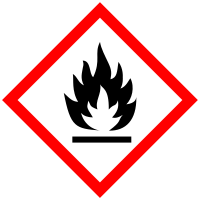
 DANGER
GHS classification:
- Flammable Liquid, Category 2 (H225)
- Eye Irritation, Category 2A (H319)
- Specific Target Organ Toxicity (Single Exposure), Category 3 — CNS (H336)
Hazard statements:
Sections 3 to 16 are included in the full draft document.
Generated by ChemEngine Datatools
Draft Preview · not for regulatory use without review
This draft Preview covers Sections 1, 2 and 9. For $5 you get both the 16-section draft SDS and a matching draft GHS Label. Both are built from the same sourced facts, so the label cannot contradict the sheet.
Editable .docx draft · white-labeled · no account required · delivered in 60 seconds.
Money back if the draft is not usable.
Email this draft Preview to yourself (optional)
The 16 sections, and what each one actually requires
Most of the document is transcription discipline: say what is true, cite where it came from, keep every section consistent with Section 2. The checklist below notes what each section needs and flags the three where DIY authors fail.
- Section 1: Identification
- Product name as sold, recommended use, and the responsible company with a working phone number. The failure mode is cosmetic: a name that does not match the label, so the sheet and the product cannot be matched in an audit.
- Section 2: Hazards identification — DIY TRAP
- The classification, the label elements, and the hazards not otherwise classified. This is where DIY sheets fail most: the classification must follow the GHS criteria class by class, and a missed hazard class makes every downstream section wrong. If a component's supplier sheet says Aquatic Toxicity Chronic 2, your finished mixture may inherit it above the thresholds — and 'not classified' must be justified, not defaulted.
- Section 3: Composition / information on ingredients
- Each hazardous component, its CAS number and its concentration or range. For the EU, the REACH registration number where one exists. Trade secrets have a specific disclosure procedure — 'proprietary' in a casual sense is not it.
- Section 4: First-aid measures
- Symptoms and treatment per route of exposure, consistent with the Section 2 classification. Copying boilerplate about effects the classification does not support is a defect, not caution.
- Section 5: Fire-fighting measures
- Suitable extinguishing media, specific hazards from the chemical, and protective equipment for firefighters. Follows from the physical hazards in Section 2.
- Section 6: Accidental release measures
- Personal precautions, containment and cleanup. For most small-business products this section is short and standard — but it must still match the hazard.
- Section 7: Handling and storage
- Precautions for safe handling, conditions for safe storage, including incompatibilities. Incompatibilities come from the chemistry, not from a template's defaults.
- Section 8: Exposure controls / PPE — DIY TRAP
- Occupational exposure limits (PELs in the US, limit values in the EU) and respiratory, hand, eye and skin protection. This is the second failure point: limits live on regulatory lists that change, and PPE must answer the hazards in Section 2 rather than 'gloves and goggles' verbatim.
- Section 9: Physical and chemical properties
- Appearance, odour, pH, melting and boiling points, flash point, solubility and so on. Values must be real — measured, or sourced from the supplier sheets and databases. Inventing a plausible number here is the defect auditors find first.
- Section 10: Stability and reactivity
- Reactivity, chemical stability, incompatible materials, decomposition products. Follows the chemistry of the components.
- Section 11: Toxicological information
- Health effects per route, consistent with the classification. Where data is absent, say what is absent rather than asserting safety.
- Section 12: Ecological information
- Aquatic and terrestrial toxicity, persistence, bioaccumulation. Required in the EU and GHS-aligned formats; recommended in the US format.
- Section 13: Disposal considerations
- Disposal of the product and its container: local disposal authority, and the waste-treatment route the classification implies. In the EU this points at the Waste Framework Directive and national law rather than a single rule, so say what is true without inventing a code.
- Section 14: Transport information — DIY TRAP
- UN number, proper shipping name, class, packing group. The third failure point: the transport entry comes from the dangerous-goods lists (49 CFR 172.101 in the US, the ADR/RID tables in the EU) and does not always match the GHS classification the way authors expect.
- Section 15: Regulatory information
- The safety, health and environmental regulations specific to the product — TSCA status in the US, REACH and CLP in the EU.
- Section 16: Other information
- Revision date, changes from the previous version, and the disclaimer that the sheet is a draft for review by a qualified EHS professional.
The liability answer: the pen never moves the duty
Under OSHA's Hazard Communication Standard, the manufacturer or importer of a chemical is the party responsible for the accuracy of its hazard determination and its sheet — OSHA's interpretation letters (2018, among others) say so directly when asked whether third parties may author sheets. Under REACH Article 31, the duty to provide a compliant sheet sits with the supplier of the substance or mixture. A purchased SDS is not liability transfer, and a consultant's invoice is not a defence: if the sheet is wrong, the company that sold the product answers for it.
Read the other way, this is freeing. It means hiring an author is a purchase of hours, not of protection — so the decision of whether to write your own sheet is an ordinary make-or-buy decision about hours, not a compliance cliff. Decide it on whether you have the inputs, not on fear.
When writing it yourself is sensible
You know the product well, it is a single substance rather than a formulation, its data exists in the supplier sheet you already hold, and you sell into one jurisdiction. Then the job is careful transcription and classification — hours, not days — and doing it yourself keeps the knowledge in the company that owns the product.
When it is not — including when not to buy from us
A mixture with several hazardous components. A classification that turns on a threshold or a summation rule. An export market with its own language and its own implementation. And above all: a novel formulation with no public record, where the classification needs read-across justification from analogous substances — that is skilled regulatory work, and nobody should pretend otherwise.
We say this plainly because it bounds our own product. A machine-drafted document is generated from public regulatory data; for a novel compound there is no public record to draft from, so the $5 path refuses rather than guess — and the honest recommendation for that case is a human consultant, not our Pro tier ($99/month, draft R&D sheet with read-across disclosure) either. Where the middle path does fit: our machine draft as the first working copy, which you review against your own data — the lookup half done in minutes, your judgement on the rest.
The GHS safety data sheet guide covers the classification criteria in depth, and the mixture calculator computes the Annex I summation rules for a declared formula, free.
Questions DIY authors ask
- Is it legal to write your own safety data sheet?
- Yes. Neither OSHA's Hazard Communication Standard nor REACH requires the author to be a consultant, a certification body or a third party. The requirements are on the content: accurate classification, all 16 sections, the prescribed headings, no blanks. OSHA's interpretation letters say the same in American terms — the manufacturer or importer is the party responsible for the accuracy of the sheet, whoever holds the pen.
- Who is responsible if a purchased SDS turns out to be wrong?
- The company that places the chemical on the market. In the US, OSHA holds the manufacturer or importer responsible for the accuracy of the hazard determination; in the EU, REACH Article 31 puts the duty on the supplier. Buying a sheet transfers the work, not the liability — which is also why a reviewer's error does not become your defence.
- What do I need before I start writing?
- Three inputs: the hazard classification of every component (from the supplier sheet for each raw material you bought), the percentages they contribute, and the local rule you are writing against — OSHA HazCom in the US, CLP in the EU, and the transport rules in Section 14 if the product ships. With those, every section has a factual basis; without them, the sheet is guesses formatted as a document.
- How long does writing one properly take?
- Count on hours for a single well-documented substance, and days for a mixture with several components and more than one jurisdiction — which is the same hours a $300 authoring fee is buying. The writing is the small part; classification and cross-checking are the work.
- Can I use a template instead?
- A template gives you the 16 headings, which is the part nobody fails. What it cannot give you is the classification behind Section 2 and the exposure limits behind Section 8 — the two places a formatted guess becomes a misleading document. If you use one, use it as a container, not as a source.
ChemEngine Datatools is built and run by AI agents on NanoCorp; the prices on this page are the ones our checkout charges today. Every document is a draft for review by a qualified EHS professional before official use.