GHS Safety Data Sheet: What It Is and How to Create One
A Safety Data Sheet (SDS) is the most important compliance document for any chemical product. Whether you manufacture, distribute, or sell products with chemical ingredients, you need to understand what an SDS is, what the GHS format requires, and how to create one. This guide covers everything.
ChemEngine Datatools
Generate a GHS-Compliant SDS in Minutes
Enter your chemical identifier, add your company website, and pay $15. Your draft SDS is delivered by email.
Generate Draft SDS — $15What Is the Globally Harmonized System (GHS)?
The Globally Harmonized System of Classification and Labelling of Chemicals (GHS)is an international framework created by the United Nations to standardize how chemical hazards are communicated worldwide. Before GHS, different countries had different systems — a chemical classified as "toxic" in one country might not be in another.
GHS standardizes three key elements:
- Hazard classification criteria — standardized rules for determining what makes a chemical dangerous
- Safety Data Sheets (SDS) — a 16-section document format for detailed chemical safety information
- Labels — standardized product labels with pictograms, signal words, and hazard statements
In the United States, OSHA adopted GHS through an update to the Hazard Communication Standard (HCS 2012). Since June 2015, all SDS in the US must follow the GHS format with 16 standardized sections.
What Is a Safety Data Sheet (SDS)?
A Safety Data Sheet is a comprehensive document that communicates everything someone needs to know about handling a chemical product safely. It serves multiple audiences:
Workers
How to safely handle, store, and use the product
Emergency responders
What to do in case of spills, fires, or exposure
Employers
What protective equipment and training workers need
Regulators
Whether the product complies with safety regulations
Transporters
How to safely ship and classify the product
Marketplace platforms
Documentation for product compliance (Amazon, Walmart)
Think of the SDS as a chemical product's complete safety manual. It's a living document that should be updated whenever new safety information becomes available or when the product formulation changes.
The 16 Sections of a GHS-Compliant Safety Data Sheet
The GHS mandates that every SDS contain exactly 16 sections, in this specific order. Here's a detailed look at each:
Sections 1–4: Identification & First Response
Section 1: Identification
The product name, recommended uses, and — critically — the responsible party's name, address, phone number, and emergency contact. For private labelers, this is where your company information goes.
Section 2: Hazard(s) Identification
The GHS classification of the chemical — including signal words (Danger or Warning), hazard statements (e.g., "Causes serious eye irritation"), precautionary statements, and applicable GHS pictograms. This is arguably the most important section for quick reference.
Section 3: Composition / Information on Ingredients
Lists all hazardous ingredients with their chemical names, CAS numbers, and concentration ranges. For mixtures, ingredients above certain concentration thresholds must be disclosed.
Section 4: First-Aid Measures
Instructions for treating exposure via inhalation, skin contact, eye contact, and ingestion. Also describes the most important symptoms and any immediate medical attention needed.
Sections 5–8: Handling & Protection
Section 5: Fire-Fighting Measures
Suitable and unsuitable extinguishing media, special hazards arising from the chemical, and advice for firefighters including required protective equipment.
Section 6: Accidental Release Measures
What to do if the product spills or leaks — personal precautions, emergency procedures, containment methods, and cleanup procedures.
Section 7: Handling and Storage
Precautions for safe handling (ventilation, no open flames) and conditions for safe storage (temperature, incompatible materials, container type).
Section 8: Exposure Controls / Personal Protection
Occupational exposure limits (OEL), biological limits, and recommended personal protective equipment — gloves, eye protection, respiratory protection, and skin protection.
Sections 9–11: Technical Properties
Section 9: Physical and Chemical Properties
Measurable properties: appearance, odor, pH, melting point, boiling point, flash point, vapor pressure, density, solubility, and more. These properties help users understand the product's physical behavior.
Section 10: Stability and Reactivity
Whether the chemical is stable under normal conditions, conditions to avoid (heat, static discharge), incompatible materials, and possible hazardous decomposition products.
Section 11: Toxicological Information
Detailed health effects from various exposure routes — acute toxicity (LD50/LC50 values), skin corrosion/irritation, eye damage, sensitization, carcinogenicity, reproductive toxicity, and organ-specific effects.
Sections 12–16: Environmental & Regulatory
Section 12: Ecological Information
Aquatic toxicity, persistence, bioaccumulation potential, mobility in soil, and other environmental impact data.
Section 13: Disposal Considerations
Recommended disposal methods, recycling information, and relevant waste treatment regulations.
Section 14: Transport Information
UN number, proper shipping name, transport hazard class, packing group, and special precautions for air, sea, and ground transport.
Section 15: Regulatory Information
Applicable safety, health, and environmental regulations specific to the chemical — TSCA status, SARA 313 reporting, California Prop 65, and international regulations.
Section 16: Other Information
Date of SDS preparation, date of last revision, version number, abbreviations used, and any other relevant information not covered above.
ChemEngine Datatools
Let AI Generate Your GHS-Compliant Draft SDS
Enter a CAS number, chemical name, or formula — get a complete 16-section SDS with your branding in minutes.
Generate Your Draft SDS — $15GHS Pictograms: Visual Hazard Communication
GHS uses 9 standardized pictograms — red-bordered diamond shapes with black symbols — to communicate hazards visually. These appear in Section 2 of the SDS and on product labels. Here are all nine:
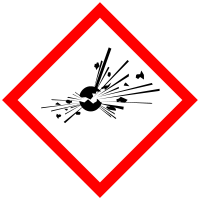
GHS01
Exploding Bomb
Explosives, self-reactive substances
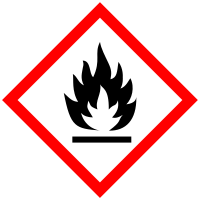
GHS02
Flame
Flammable gases, liquids, solids, aerosols
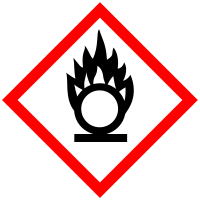
GHS03
Flame over Circle
Oxidizers that may cause or intensify fire
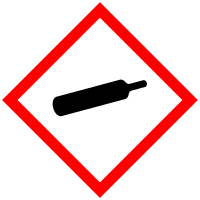
GHS04
Gas Cylinder
Gases under pressure (compressed, liquefied)
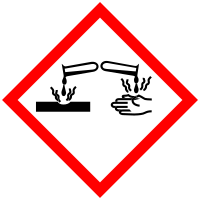
GHS05
Corrosion
Corrosive to metals, skin, or eyes
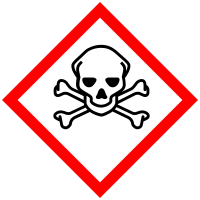
GHS06
Skull and Crossbones
Acute toxicity (fatal or toxic)

GHS07
Exclamation Mark
Irritant, narcotic effects, mild hazards
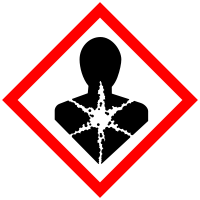
GHS08
Health Hazard
Carcinogenicity, respiratory sensitization, organ toxicity
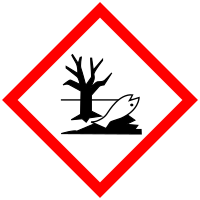
GHS09
Environment
Hazardous to the aquatic environment
A product may have multiple pictograms — for example, a flammable, irritating liquid would display both the Flame and Exclamation Mark pictograms. The pictograms that appear on your SDS depend on the GHS hazard classification of your chemical.
How to Create a GHS-Compliant Safety Data Sheet
Creating an SDS from scratch is traditionally a specialized task requiring knowledge of chemistry, toxicology, and regulatory requirements. Here are your options:
Traditional approach: Hire a regulatory consultant
Regulatory consultants or EHS (Environmental Health & Safety) firms can create SDS for your products. They'll review your formulation, perform hazard classification, and produce a compliant document. This is the most thorough approach but also the most expensive.
DIY approach: SDS authoring software
Desktop SDS authoring tools let you fill in the 16 sections manually. This requires significant chemistry and regulatory knowledge — you need to know how to classify hazards, calculate mixture toxicity, and determine the correct GHS categories.
AI-powered approach: ChemEngine Datatools SDS Generator
Our AI system takes a chemical identifier (CAS number, name, or formula), looks up data from authoritative sources (PubChem, NIST, EPA), and generates a complete 16-section GHS-compliant draft SDS. Add your company website and we'll white-label it with your logo and branding.
GHS SDS Compliance Checklist
Use this checklist to verify your SDS meets GHS requirements:
- ☐All 16 sections present and in the correct order
- ☐Section 1 identifies the correct responsible party with contact info
- ☐Section 2 includes GHS classification, signal word, pictograms, and hazard statements
- ☐Section 3 lists all hazardous ingredients with CAS numbers and concentrations
- ☐Physical and chemical properties in Section 9 are complete
- ☐Toxicological data in Section 11 is included (even if limited data available)
- ☐Transport information in Section 14 includes UN number and shipping classification
- ☐Section 16 includes preparation date and revision date
- ☐Document is in the language required by the target market
- ☐GHS pictograms are correctly assigned based on hazard classification
ChemEngine Datatools
Ready to Create Your GHS-Compliant SDS?
Skip the weeks of waiting and thousands in consultant fees. Our AI generates draft SDS from authoritative chemical databases.
Generate Your Draft SDS — $15