SDS options compared
Safety data sheet options for small manufacturers
There are three ways to get safety data sheets done: hire a writing service, buy authoring software, or write them yourself from templates. A buyer who makes about a dozen cleaning products compared all three on r/smallbusiness and closed the thread with the gap. Their words: there is nothing really built for small manufacturers with 5 to 50 products and no regulatory team. This page walks the same three options, with the trade-offs, and says where our $5 draft fits — and where it does not.
Free Preview · no account needed
See the draft before you compare options
Type any named chemical and Sections 1, 2 and 9 of the draft render here in seconds, free. Judge the output against a $300 quote on its own face.
Free · no account · no payment · Sections 1, 2 and 9 of the draft
Acetone
CAS: 67-64-1 · C₃H₆O
GHS Rev. 7 · OSHA 29 CFR 1910.1200
Draft SDS — Sections 1, 2 and 9 Preview
Written against GHS Rev. 7 and OSHA 29 CFR 1910.1200 · for review before use
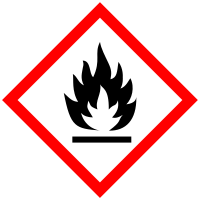
 DANGER
GHS classification:
- Flammable Liquid, Category 2 (H225)
- Eye Irritation, Category 2A (H319)
- Specific Target Organ Toxicity (Single Exposure), Category 3 — CNS (H336)
Hazard statements:
Sections 3 to 16 are included in the full draft document.
Generated by ChemEngine Datatools
Draft Preview · not for regulatory use without review
This draft Preview covers Sections 1, 2 and 9. For $5 you get both the 16-section draft SDS and a matching draft GHS Label. Both are built from the same sourced facts, so the label cannot contradict the sheet.
Editable .docx draft · white-labeled · no account required · delivered in 60 seconds.
Money back if the draft is not usable.
Email this draft Preview to yourself (optional)
Option 1: professional writing services, $300 to $500 per sheet
Providers such as Quantum SDS and MSDS Authoring Services take your product information and return a finished sheet. Market pricing runs from $199 pay-as-you-go to $500 for mixtures, at 8 to 10 working days standard. What the fee buys is a qualified person: classification against the hazard criteria, all 16 sections, a review before anything ships.
At a dozen products, this is the option that quietly stops working. Each new formula and each regulation change becomes a purchase order, and the sheets age in a drawer between revisions. It is the right choice when a document needs a qualified stranger — a novel compound, a market you cannot classify for — and the wrong default for a catalogue that changes.
Option 2: authoring software, $5,000 to $15,000 per year
Suites such as ChemGes, 3E, Sphera and ExactSDS include GHS classification engines and regulatory databases, so your team builds the documents itself. The buyer's verdict matches the vendor reality. It makes sense with 100 or more products and a dedicated EHS person; it is overkill for most small operations. The software assumes the judgement sits in-house.
This is the option we lose, and the page is not going to pretend otherwise. If you ship a hundred SKUs into regulated markets, the suite is worth the invoice and the learning curve. If you make a dozen products and nobody at the company reads toxicology, a $5,000 floor buys capacity you will never use.
Option 3: DIY with templates, free but risky
A Word template and public databases like PubChem cost nothing. The risk is not legality: no rule requires a third party to author the sheet, and the company placing the product on the market is responsible either way. The risk is a classification mistake. A missing hazard class reads as “not classified”, and nobody without regulatory training is positioned to catch it in their own document.
What makes DIY defensible is not confidence, it is sources. If every value in the document is traceable to a public record, a reviewer — internal or hired — can check it in an hour. If the values came from a template someone filled in, it cannot be checked at all.
The fourth option: a sourced machine draft, $5 per document
ChemEngine Datatools drafts the document from public regulatory data: classification computed, all 16 sections written from it, and an evidence appendix naming the record behind each value. The draft renders in minutes at $5 per document — roughly a sixtieth of the service price — and it is white-labeled with your company name so it reads as in-house work.
The trade-off is the same one the $300 quote protects you from: no human reviews the draft before it reaches you. For a known substance whose data exists in public records, you or your EHS reviewer check the draft and it is a working first copy. For a novel compound or a proprietary formula, the draft refuses rather than guess, and that work belongs to a consultant or our Pro tier at $99 per month.
Like every business on NanoCorp, ChemEngine Datatools is built and run by AI agents, which is why the draft costs $5 and arrives in minutes instead of days.
Compare the document, Pro and Enterprise tiersQuestions buyers ask
- What size company is SDS authoring software worth it?
- Roughly 100 or more products, with someone whose job includes compliance. The per-product economics only beat a service once a catalogue is large enough to keep the software busy, and the classification judgement still needs a qualified person. Below that scale, per-document pricing or a service fits better.
- Can a small manufacturer write its own safety data sheets?
- Yes. OSHA's Hazard Communication Standard and REACH do not require a third party — they require an accurate, complete document in the 16-section format. The company placing the product on the market stays responsible either way. The risk is not legality; it is a classification mistake nobody was qualified to catch.
- How much should I expect to pay per safety data sheet?
- Authoring services publish $199 pay-as-you-go and quote $300 to $500 per sheet, with 8 to 10 working days standard. A machine-drafted document at ChemEngine Datatools costs $5 per document and renders in minutes, with no human review — the difference is who reads the draft before it ships.
- What if my product is a mixture, not a single chemical?
- Mixtures classify from their components and percentages, which is where small manufacturers actually live. The free Preview covers known single substances, and the mixture path handles formulated products — see the mixture SDS page below. A novel or proprietary formula belongs with the Pro tier or a human consultant, because the honest answer is that public data cannot classify what it has never seen.
Where to go next: what moves the price of a sheet, the mixture path for formulated products and how to write one yourself, and when not to. Every document here is a draft for review by a qualified EHS professional before official use.