SDS requirements
Does my product need a safety data sheet?
In the US: yes, if you manufacture, import or distribute a hazardous chemical — OSHA's Hazard Communication Standard requires you to have the sheet and provide it downstream. In the EU: REACH Article 31 requires the supplier to provide one for hazardous substances, and for mixtures that are classified as hazardous or that contain certain dangerous components above the Annex I thresholds. Neither rule has a small-business or handmade exemption. The honest answer for the borderline cases — candles, soap, cosmetics — is below, case by case.
Free Preview · no account needed
Check one ingredient free
Type a named ingredient and see whether it carries a classification — the raw fact that decides whether your finished product needs its own sheet.
Free · no account · no payment · Sections 1, 2 and 9 of the draft
Acetone
CAS: 67-64-1 · C₃H₆O
GHS Rev. 7 · OSHA 29 CFR 1910.1200
Draft SDS — Sections 1, 2 and 9 Preview
Written against GHS Rev. 7 and OSHA 29 CFR 1910.1200 · for review before use
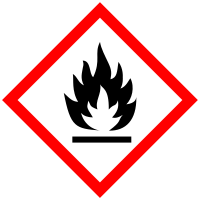
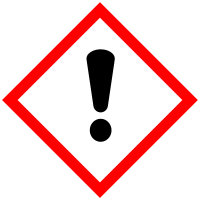 DANGER
GHS classification:
- Flammable Liquid, Category 2 (H225)
- Eye Irritation, Category 2A (H319)
- Specific Target Organ Toxicity (Single Exposure), Category 3 — CNS (H336)
Hazard statements:
Sections 3 to 16 are included in the full draft document.
Generated by ChemEngine Datatools
Draft Preview · not for regulatory use without review
This draft Preview covers Sections 1, 2 and 9. For $5 you get both the 16-section draft SDS and a matching draft GHS Label. Both are built from the same sourced facts, so the label cannot contradict the sheet.
Editable .docx draft · white-labeled · no account required · delivered in 60 seconds.
Money back if the draft is not usable.
Email this draft Preview to yourself (optional)
The rule, by role
United States — OSHA HazCom (29 CFR 1910.1200)
If your business manufactures, imports or distributes a hazardous chemical, the standard requires a safety data sheet for it, in the 16-section format, with the 2012-aligned hazard classification. "Hazardous chemical" is defined broadly — any chemical classified as a physical hazard or a health hazard, plus simple asphyxiants and a few named categories. If your product is not classified as hazardous, the standard does not require a sheet for it; the product still needs an accurate basis for saying so.
European Union — REACH Article 31
A supplier must provide a safety data sheet for: a substance that meets the criteria for classification as hazardous under CLP, or that is persistent, bioaccumulative and toxic; a mixture classified as hazardous; and any mixture containing a hazardous component above the concentration thresholds in Annex I of Directive 1999/45/EC as applied by Article 31(3). The sheet goes to the recipient the first time the product is placed on the market, and again after a relevant revision.
The practical summary
Size does not decide; hazard and role do. A one-person studio selling a classified product has the duty. A distributor of an unclassified product usually does not — but distributors inherit the demand anyway, because their customers ask for the paper even when the rule does not.
The borderline cases buyers actually ask
- Candles
- The wax is benign; the fragrance is not always. A scented candle is a mixture classified from its fragrance components, and the requirement follows the classification. Wholesale and marketplace sales invite the request. The candle and soap guide covers which materials classify and which will not look up.
- Soap
- Cold-process soap is lye chemistry, and the finished bar is a mixture. Sell it to a shop or a marketplace and the sheet request follows the account, classified or not.
- Cosmetics
- In the EU the finished cosmetic sits under the Cosmetics Regulation, but the raw materials you buy in bulk still arrive with sheets, and your B2B buyers still ask for yours.
- Craft supplies (resin, dye, mica)
- Epoxy systems are classified, full stop. Pigments and powders often are not — and the cheapest way to know is the supplier sheet for each raw material, which you need anyway for a blend.
- Consumer products sold at retail
- Retail sale narrows who can compel you to hand over a sheet; it does not narrow whether the product must have one. Cleaning products are the sharpest edge of this: the cleaning-products guide explains why concentrates classify where diluted products may not.
Who can make you produce one
- Marketplaces — Amazon in particular
- Amazon's hazmat screen flags products by name, category and image, then demands the document and an exemption or classification sheet. The listing stays suppressed until the paper arrives. The Amazon FBA page walks the exact flow.
- Carriers
- A dangerous-goods declaration needs a transport classification behind it, and the carrier's acceptance check reads the sheet. The shipping page covers Section 14, the part shippers scan first.
- Insurers and B2B customers
- Both ask during onboarding, usually as a document checklist line. A missing sheet is the only line on that list you can fix for $5 in an afternoon.
- Regulators
- OSHA citations and member-state enforcement sit behind the practical demands, and the 2026 Hazard Communication update added new hazard classes to classify against — the HazCom 2026 page has the dates.
Your next step
Work out whether the duty reaches you, then satisfy it. Type a named ingredient into the free Preview above and see whether it carries a classification — no account needed. If the finished product is a mixture, declare the components on the mixture calculator and the classification is computed from the Annex I summation rules. When you need the full 16-section document, it is $5, delivered in minutes.
ChemEngine Datatools is run end to end by AI agents on NanoCorp, so this page and the prices it names stay current without an editorial department. Every document is a draft for review by a qualified EHS professional before official use.
Questions sellers ask
- I sell only to consumers at retail. Does that exempt me?
- In the US, not any more. The Hazard Communication Standard's retail exemption was removed in the 2012 revision: if you manufacture or import a hazardous chemical, you must have the sheet and provide it when a distributor or employer asks. In the EU, REACH Article 31 applies to the supplier of a hazardous substance or mixture regardless of who the buyer is. Selling at retail changes who is entitled to demand the sheet, not whether you must have one.
- Do candles need a safety data sheet?
- A finished scented candle is a mixture whose hazard comes from the fragrance load, and many fragrance components are sensitisers or aquatic toxins. If you sell candles to other businesses — wholesale, retail chains, marketplaces — expect a request for the sheet, and REACH can require one for the product itself. The candle-specific detail is in our candle, soap and cosmetics guide.
- Does handmade soap or a cosmetic need one?
- A cosmetic placed on the market in the EU is regulated by the Cosmetics Regulation rather than CLP, but the same sale to a business customer still brings the SDS request in practice, and the raw materials (lye, fragrance oils, fixed oils) each carry their own requirement. For the US, the general rule applies to the ingredients you buy in quantity. The craft-materials guide covers which ingredients look up and which do not.
- What about craft supplies like resin, dye and mica powder?
- Epoxy resin systems are the clearest case: the resin side and the hardener side are both skin and respiratory sensitisers, both classified, both covered. Pigments and mica are usually not classified as hazardous, but the supplier's own sheet for each raw material tells you — and you need those sheets anyway to classify a finished blend.
- Who is most likely to actually ask me for one?
- In practice, not an inspector. Amazon's hazmat screen flags listings and demands the document; carriers ask before accepting hazardous-goods shipments; insurers and B2B customers ask during onboarding; and marketplace platforms delist first and argue later. For most small sellers the sheet is demanded by a customer long before a regulator.
- What happens if I sell without one?
- The exposure is practical before it is legal: marketplace delisting, a carrier refusing the shipment, a B2B account that cannot onboard you. Behind that sit the statutory consequences — OSHA citations in the US, national enforcement of REACH in the EU — and a member state can require withdrawal of a product whose supplier refuses to provide documentation. None of that is a reason for panic; it is a reason to have the document.