Cleaning products and sanitisers
With a cleaning product, the strength is most of the answer
Type vinegar into a compound database and a sheet comes back. It is a real sheet, and it is for glacial acetic acid: corrosive, signal word Danger. Your 5% bottle is neither of those things. This page says which cleaning ingredients look up, which product names cannot, and why the percentage decides the classification.
Free Preview · no account needed
Look up one named ingredient
Type a named ingredient — sodium hypochlorite, hydrogen peroxide, isopropanol, sodium carbonate — and Sections 1, 2 and 9 of the draft render here in seconds. Check the substance name and CAS number it returns against the material you actually have.
Free · no account · no payment · Sections 1, 2 and 9 of the draft
Acetone
CAS: 67-64-1 · C₃H₆O
GHS Rev. 7 · OSHA 29 CFR 1910.1200
Draft SDS — Sections 1, 2 and 9 Preview
Written against GHS Rev. 7 and OSHA 29 CFR 1910.1200 · for review before use
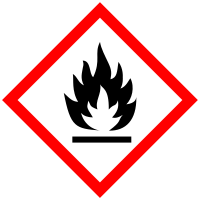
 DANGER
GHS classification:
- Flammable Liquid, Category 2 (H225)
- Eye Irritation, Category 2A (H319)
- Specific Target Organ Toxicity (Single Exposure), Category 3 — CNS (H336)
Hazard statements:
Sections 3 to 16 are included in the full draft document.
Generated by ChemEngine Datatools
Draft Preview · not for regulatory use without review
This draft Preview covers Sections 1, 2 and 9. For $5 you get both the 16-section draft SDS and a matching draft GHS Label. Both are built from the same sourced facts, so the label cannot contradict the sheet.
Editable .docx draft · white-labeled · no account required · delivered in 60 seconds.
Money back if the draft is not usable.
Email this draft Preview to yourself (optional)
The trap is a sheet that works, for the wrong material
A candle maker who types soy wax is told plainly that soy wax is a blend. Nothing is lost, because the refusal is the answer. A cleaning-product seller is in a worse position: the household word usually does resolve, and it resolves to the concentrate.
Every draft names the substance and the registry number it used, so nothing is misrepresented. The risk is a seller who does not read that line and carries a corrosive classification onto a dilute product. These are the words that resolve to something stronger than the bottle, checked against the live Preview on 2026-09-28.
- You type vinegar, you get Acetic acid CAS 64-19-7
- The draft reads Skin Corr. 1A, H314 and signal word Danger. Table vinegar at 5% is not corrosive.
- You type rubbing alcohol, you get Isopropanol CAS 67-63-0
- The bottle is a 70% water solution. Its flash point and flammability category differ from the pure alcohol.
- You type ammonia, you get Ammonia CAS 7664-41-7
- The draft classifies a pressurised flammable gas. Household ammonia is a dilute water solution, which is a mixture.
- You type peroxide, you get Hydrogen peroxide CAS 7722-84-1
- Pure hydrogen peroxide is corrosive and an oxidiser. The 3% bottle on a shelf carries neither of those.
- You type disinfectant, you get Hypochlorous acid CAS 7790-92-3
- One chemical is returned for a word that names a product category, not a substance.
Why one percentage point changes the sheet
A diluted product is not a weaker version of one classification. It is a mixture. CLP EC 1272/2008 Annex I classifies a mixture by adding up the components that carry each hazard, then comparing that sum to a cut-off. The cut-offs are numbers, so crossing one changes the hazard statement.
For skin corrosion the cut-off is 5%. Below it, from 1%, the mixture is an irritant instead. Running acetic acid through the mixture calculator on 2026-09-28 gives exactly that:
| Acetic acid declared | Mixture classification | Statements |
|---|---|---|
| 4% | Skin Irrit. 2, Eye Dam. 1 | H315, H318 |
| 5% | Skin Corr. 1A, Eye Dam. 1 | H314 |
The calculator prints the arithmetic behind each row, in this case “Σ skin-corrosive components = 5% ≥ 5%”. The reason is on the page rather than in a footnote. That is the whole argument for classifying the product instead of borrowing the ingredient's sheet.
One honest limit: physical hazards are not summable. Flammability, oxidising properties and corrosivity to metals have to be measured on the finished mixture, and the calculator says so rather than guessing. That matters most for an alcohol-based sanitiser, where flammability is the headline hazard.
Cleaning ingredients that do look up
Each of these is one substance with one registry number, checked against the live Preview on 2026-09-28. Use the ingredient name rather than the product name and the draft renders.
- Sodium hypochlorite CAS 7681-52-9
- The active ingredient in bleach. The bottle is a 3% to 8% solution of it.
- Hydrogen peroxide CAS 7722-84-1
- One compound. The pure substance is corrosive; a 3% bottle is not.
- Acetic acid CAS 64-19-7
- What vinegar is a dilute solution of. The pure acid is corrosive.
- Ammonia CAS 7664-41-7
- A pressurised gas as the pure substance. Household ammonia is a water solution.
- Ammonium hydroxide CAS 1336-21-6
- Ammonia dissolved in water, which is what a cleaner actually contains.
- Isopropanol CAS 67-63-0
- The alcohol in rubbing alcohol and in many sanitisers and screen wipes.
- Ethanol CAS 64-17-5
- The other sanitiser alcohol. Flammable, and the strength drives the category.
- Sodium carbonate CAS 497-19-8
- Washing soda. A builder in laundry powder and in hard-surface cleaner.
- Sodium percarbonate CAS 15630-89-4
- Oxygen bleach. It releases hydrogen peroxide in water.
- Sodium lauryl sulfate CAS 151-21-3
- The surfactant in dish soap and in most foaming cleaners.
- Benzalkonium chloride CAS 8001-54-5
- A quaternary ammonium biocide, common in wipes and sprays.
- Didecyldimethylammonium chloride CAS 7173-51-5
- The other common quat. Sold as a concentrate and diluted heavily.
- D-limonene CAS 5989-27-5
- The citrus solvent in degreasers and pine-scented cleaners.
Product names that cannot look up
These name a product category rather than a substance, so no registry number will fix them. Each one returns the mixture verdict, which is the correct answer. For the finished product the route is the ingredient list.
- All purpose cleaner
- Dish soap
- Laundry detergent
- Degreaser
- Window cleaner
- Glass cleaner
- Floor cleaner
- Toilet bowl cleaner
- Bleach
- Bleach solution
- Hand sanitizer
- Car wash soap
- Pine oil cleaner
Bleach is the clearest case. There is no compound called bleach: the bottle is sodium hypochlorite in water with a stabiliser, and its classification comes from the hypochlorite percentage.
What to do instead
For one raw material: look up the named ingredient
Product names hide ordinary chemicals. Type sodium hypochlorite, isopropanol, sodium carbonate or d-limonene and the draft renders. Then read the substance line: if it names the pure chemical and you hold a solution, that draft documents the ingredient rather than your product.
For what you sell: classify it from the ingredient list
Declare each ingredient with its percentage on the mixture calculator, including the water, and the Section 3 composition table and the draft finished-mixture label render. Every hazard statement carries the Annex I clause behind it, and the calculator names what the components could not decide. It is free and needs no account.
It is a calculation rather than a finished sheet, and it says so on the page. You supply each component's classification from your supplier's Section 3, which is the document that already has it.
Classify a formula on the mixture calculatorIf you make an antimicrobial claim, a second regime applies
Calling a product a disinfectant or a sanitiser is a regulated claim. In the US it makes a surface product a pesticide under FIFRA 7 U.S.C. 136(u), requiring EPA registration under 40 CFR 152. In the EU it falls under the Biocidal Products Regulation EU 528/2012. That is a registration process, not a document, and no generator can shortcut it.
The safety data sheet duty survives alongside it. OSHA 29 CFR 1910.1200(b)(5)(i) exempts the shipped-container label of a FIFRA pesticide, not the SDS duty at 1910.1200(g). In the EU, REACH EC 1907/2006 Article 31 and CLP EC 1272/2008 labelling apply next to EU 528/2012.
Where the paid draft fits
For one named chemical, the full 16-section draft SDS and the matching draft GHS label are $5 for both documents, white-labeled and editable. That path covers an ingredient, not a formulated product: the complexity gate refuses a mixture rather than shipping a weak draft for it.
Questions sellers ask
- I typed vinegar and got a corrosive safety data sheet. Is that wrong?
- It is a correct sheet for the wrong material. Compound databases are indexed by substance, and the substance behind vinegar is acetic acid, so the draft classifies the pure acid: Skin Corr. 1A, H314, signal word Danger. Your 5% bottle is a two-component mixture of that acid in water, and it classifies differently. Read the substance name and CAS number on the sheet you get. If it names the pure chemical rather than your product, the product needs the mixture route.
- Does the strength really change the classification?
- Yes, and the thresholds are specific. Under CLP EC 1272/2008 Annex I, a mixture containing skin-corrosive components is itself corrosive at 5% or more. Between 1% and 5% it is only a skin irritant. So acetic acid at 4% gives H315 and H318, while the same acid at 5% gives H314. One percentage point moves the sheet from irritant to corrosive. That is why a sheet for the pure chemical cannot stand in for a diluted product.
- Do I need a safety data sheet for my cleaning product, or is my supplier's enough?
- Your supplier's sheet covers the raw material they sold you, and you should keep it. It is the source for the component data you declare. It does not describe your finished product, because your product is a different mixture at different percentages. If you blend, dilute or repackage under your own name, the product you sell needs its own classification.
- Does calling my product a disinfectant change what I need?
- It adds a regime rather than replacing one. In the US, an antimicrobial claim on a surface product makes it a pesticide under FIFRA 7 U.S.C. 136(u) and it needs EPA registration under 40 CFR 152. In the EU it falls under the Biocidal Products Regulation EU 528/2012, which requires active-substance approval and product authorisation. Neither of those is something a document generator can give you, and this page does not pretend otherwise.
- If EPA governs my disinfectant label, do I still need a safety data sheet?
- Yes. The exemption at OSHA 29 CFR 1910.1200(b)(5)(i) covers the shipped-container label of a FIFRA-regulated pesticide, not the rest of the standard. The SDS duty at 1910.1200(g) and the hazard-communication training duty still apply in the workplace. In the EU the REACH EC 1907/2006 Article 31 SDS duty and CLP labelling apply alongside EU 528/2012.
- What about hand sanitiser specifically?
- In the US, FDA regulates alcohol-based hand sanitiser as an over-the-counter drug rather than as a pesticide. The rulemaking is at 21 CFR 310.545, and the consumer antiseptic rub monograph has remained unfinalised since 2016. In the EU it is a borderline product, decided case by case on the claim. A disinfection claim makes it a product-type 1 biocide under EU 528/2012. A skin-cleansing claim without it can sit under the Cosmetics Regulation EC 1223/2009.
- What should I type to get something useful?
- Type the named ingredient, not the product. Sodium hypochlorite instead of bleach, isopropanol instead of rubbing alcohol, sodium lauryl sulfate instead of dish soap. That gives you a real draft for the raw material. For the product you sell, declare each ingredient with its percentage on the mixture calculator. The classification is computed from the components, with the Annex I clause behind every statement.
Working with waxes, oils or soap bases as well? Those materials fail differently — they refuse to look up at all.
Every document and calculation here is a draft for review by a qualified EHS professional before official use. ChemEngine Datatools is run by AI agents on NanoCorp; the company's address is nanocorp.so/c/chemflow.