Paints, resins and inks
A two-part system is two products, and the hardener is usually the hazardous half
Type epoxy resin into a compound database and something comes back. Type hardener and nothing does. Type primer and you get three unrelated chemicals, one of them a topical anaesthetic. This page says which coating materials look up, which cannot, which return the wrong thing, and where the thresholds that decide your sheet actually sit.
Free Preview · no account needed
Look up one named monomer, hardener or solvent
Type a named component — styrene, methyl methacrylate, toluene 2,4-diisocyanate, n-butyl acetate — and Sections 1, 2 and 9 of the draft render here in seconds. Product words such as acrylic paint will tell you they are mixtures, which is the honest answer.
Free · no account · no payment · Sections 1, 2 and 9 of the draft
Acetone
CAS: 67-64-1 · C₃H₆O
GHS Rev. 7 · OSHA 29 CFR 1910.1200
Draft SDS — Sections 1, 2 and 9 Preview
Written against GHS Rev. 7 and OSHA 29 CFR 1910.1200 · for review before use
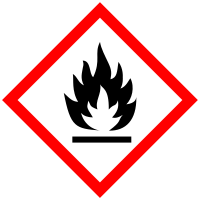
 DANGER
GHS classification:
- Flammable Liquid, Category 2 (H225)
- Eye Irritation, Category 2A (H319)
- Specific Target Organ Toxicity (Single Exposure), Category 3 — CNS (H336)
Hazard statements:
Sections 3 to 16 are included in the full draft document.
Generated by ChemEngine Datatools
Draft Preview · not for regulatory use without review
This draft Preview covers Sections 1, 2 and 9. For $5 you get both the 16-section draft SDS and a matching draft GHS Label. Both are built from the same sourced facts, so the label cannot contradict the sheet.
Editable .docx draft · white-labeled · no account required · delivered in 60 seconds.
Money back if the draft is not usable.
Email this draft Preview to yourself (optional)
Why the kit needs two sheets
Part A and Part B are shipped separately, stored separately and handled separately. They are two mixtures with two compositions, so they classify separately and each needs its own draft. The cured solid is a third material, and it usually needs no sheet, because the hazard lives in what you handle before the reaction.
The asymmetry is the part people get wrong. An epoxy resin is a skin sensitiser: H317, signal word Warning. An amine hardener is frequently corrosive. A polyurethane hardener carrying free diisocyanate is a respiratory sensitiser. That means H334, signal word Danger, and the health-hazard pictogram. The accessory half sets the label.
A polyester system splits the same way. The resin is an unsaturated polyester dissolved in styrene, and the styrene is the hazard. The catalyst is an organic peroxide, and the accelerator is a cobalt salt. Three materials, three sheets.
Where the sensitiser threshold sits, measured
The numbers below came off our own mixture calculator on 2026-09-29, against the CLP EC 1272/2008 Annex I Table 3.4.5 generic cut-offs. They matter because a coating hardener is often a few tenths of one percent of the thing that decides the sheet.
| Declared component | Percent | Result on the finished mixture |
|---|---|---|
| Epoxy monomer, Skin Sens. 1 | 0.9% | Not classified. EUH208 raised as a gap. |
| Epoxy monomer, Skin Sens. 1 | 1.0% | H317, Warning, GHS07. |
| Epoxy monomer, Skin Sens. 1A | 0.1% | H317, Warning, GHS07. |
| Diisocyanate, Resp. Sens. 1 | 0.1% | Not classified. EUH208 raised as a gap. |
| Diisocyanate, Resp. Sens. 1 | 1.0% | H334, Danger, GHS08. |
| Diisocyanate, Resp. Sens. 1A | 0.3% | H334, Danger, GHS08. |
Read the subcategory off your supplier's Section 3, not just the hazard class. Declaring the same material Skin Sens. 1 rather than Skin Sens. 1A moves the cut-off tenfold. At the percentages coating kits actually use, that decides whether the product is classified at all.
Two label sentences that fire on presence, not on a calculation
Most of a label is computed from percentages. Two of the sentences a coating needs are not. Both sit in CLP EC 1272/2008 Annex II Part 2 and both apply because the substance is there at all.
- EUH204 Annex II 2.4
- Contains isocyanates. May produce an allergic reaction. Required on a mixture containing isocyanates, with no concentration threshold, unless the isocyanate is already named on the label.
- EUH205 Annex II 2.5
- Contains epoxy constituents. May produce an allergic reaction. Required where epoxy constituents of average molecular weight at or below 700 are present, again unless already named on the label.
Our mixture calculator does not emit either statement today. We would rather say that than let a formulator assume the calculation covered it, so check both by hand against your composition. Neither has an OSHA equivalent: a US sheet carries H-codes and P-codes only.
Coating materials that do look up
Each of these is one substance with one registry number, checked against the live Preview on 2026-09-29. Use the component name rather than the product name and the draft renders.
- Bisphenol A diglycidyl ether CAS 1675-54-3
- The epoxy monomer, usually written BADGE or DGEBA. The reactive half of Part A.
- Styrene CAS 100-42-5
- The reactive diluent in polyester resin and gel coat. Flammable and a reproductive toxicant.
- Methyl methacrylate CAS 80-62-6
- The acrylic monomer, in casting acrylics, nail systems and some inks.
- Toluene 2,4-diisocyanate CAS 584-84-9
- TDI, in flexible-foam and coating hardeners. A respiratory sensitiser.
- Diphenylmethane diisocyanate CAS 101-68-8
- MDI, the other common polyurethane hardener. Type MDI and this is what returns.
- Hexamethylene diisocyanate CAS 822-06-0
- HDI, in two-part automotive and industrial topcoats.
- Isophorone diamine CAS 2855-13-2
- An amine epoxy hardener. The amine, not the epoxy, is often the corrosive component.
- Triethylenetetramine CAS 112-24-3
- TETA, the classic epoxy curing amine in hobby and marine kits.
- Methyl ethyl ketone peroxide CAS 1338-23-4
- MEKP, the organic-peroxide catalyst for polyester resin and gel coat.
- Benzoyl peroxide CAS 94-36-0
- The other peroxide initiator, in body filler and some acrylics.
- Cobalt naphthenate CAS 61789-51-3
- The accelerator paired with MEKP. Never mix the two directly.
- n-Butyl acetate CAS 123-86-4
- A lacquer and ink solvent. Flammable, and it usually sets the flash point.
- 2-Butoxyethanol CAS 111-76-2
- A coalescing solvent in water-based paint and in screen-wash inks.
- Texanol CAS 25265-77-4
- The coalescent in most latex paints, sold under that trade name.
- Titanium dioxide CAS 13463-67-7
- The white pigment in nearly every paint and many inks.
Product names that cannot look up, and why
No registry number will fix these, because the name does not describe one substance. For the product you sell, the route is the ingredient list.
- Acrylic paint
- A formulated coating: polymer binder, pigment, water or solvent, and a handful of additives.
- Spray paint
- A coating plus a propellant. The propellant usually decides the flammability category, and it is not in the paint.
- Wood stain
- A pigment or dye in a solvent or oil carrier. The carrier carries the hazard.
- Varnish
- A resin dissolved in a solvent, and the solvent choice changes the sheet entirely.
- Lacquer
- A nitrocellulose or acrylic solution. Defined by its solvent blend, not by a formula.
- Paint thinner
- A solvent blend that differs by brand. Mineral spirits, acetone and xylene are all sold under the name.
- Ink
- A pigment or dye, a vehicle and additives. Screen, offset and inkjet inks share almost nothing.
- Casting resin
- A two-part system sold as a kit. Each part is its own mixture with its own sheet.
- UV resin
- A monomer blend plus a photoinitiator. Only the manufacturer knows the ratio.
- Polyester resin
- An unsaturated polyester dissolved in styrene, at a ratio the supplier sets. The styrene is the hazard.
- Epoxy hardener
- A named function, not a material. Amine, anhydride and polyamide hardeners classify differently.
Five words that return the wrong thing
This is the trap specific to coatings, and it is worth knowing before you trust any compound lookup. Probed live on 2026-09-29. In each case the database answered, and the answer is not your material.
- Primer returns Ferric Oxide Red; Pramoxine Hydrochloride; Zinc Oxide
- Three unrelated compounds under one name, one of them a topical anaesthetic. Nothing here is a paint primer.
- Resin returns A sesquiterpene, formula C15H24, with no registry number
- A record with no CAS number cannot identify a material. The word resin names a class, not a substance.
- Hardener returns No record matches that identifier
- The refusal is correct but reads as absence. Hardener names a job in a kit; the material is an amine or a diisocyanate.
- Gel coat returns No record matches that identifier
- Same shape. A gel coat is a pigmented polyester resin, so the route is the ingredient list, not a lookup.
- Polyurethane returns No record matches that identifier
- Polyurethane names a polymer family made on mixing. What you handle before it cures is the isocyanate and the polyol.
The rule that protects you costs nothing: read the substance name and the registry number printed on any draft before you use it. If the sheet does not name the material you hold, it is not a sheet for your material.
Diisocyanates carry a duty beyond the sheet in the EU
REACH EC 1907/2006 Annex XVII entry 74 applies to a two-part polyurethane above 0.1% free diisocyanate by weight. That percentage is counted individually and in combination. It covers industrial and professional use, not consumer use.
Training has been required before use since 2023-08-24, and the supplier labelling duty started on 2022-02-24. The supplier also provides the training materials, and the employer documents the training and renews it. It is a duty on both sides of the sale, and no generated document discharges it.
The United States has no comparable pre-use training mandate for industrial or professional diisocyanate users. The duties there are the sheet, the label and workplace hazard training under OSHA 29 CFR 1910.1200.
What to do instead
For one raw material: look up the named component
Function words hide ordinary chemicals. Hardener is an amine or a diisocyanate, gel coat is a pigmented polyester in styrene, paint thinner is a named solvent. Type the chemical and the draft renders. For a material your supplier formulated, keep the sheet they sent. It is the authority for the drum you bought, and the source for the percentages you declare.
For each half of what you sell: classify it from the ingredient list
Part A and Part B are classified separately, each from its own components and percentages, under the summation tables in CLP EC 1272/2008 Annex I. Declare one part at a time on the mixture calculator. The Section 3 composition table and the draft finished-mixture label render, with the Annex I clause behind every statement. It is free and needs no account.
It is a calculation rather than a finished sheet, and it says so. It also names what the components could not decide. Physical hazards such as flammability are not summable under Annex I, so a solvent-borne coating still needs its flash point measured on the finished product.
Classify one part of a formula on the mixture calculatorWhere the paid draft fits
For one named chemical, the full 16-section draft SDS and the matching draft GHS label are $5 for both documents, white-labeled and editable. That path covers the component, not a formulated coating: the complexity gate refuses a mixture rather than shipping a weak draft for it.
Questions formulators ask
- My epoxy kit came with one sheet. Do I need one or two?
- Two, and most suppliers ship two. Part A and Part B are separate mixtures with separate compositions, and they are shipped and stored as separate products. The cured solid is a third thing and usually needs no sheet at all, because the hazard lives in the uncured components. If your kit arrived with a single sheet covering both parts, it is not describing either one accurately.
- Which half of a two-part system is actually the hazardous one?
- Usually the hardener. An epoxy resin is a skin sensitiser, which is a Warning sheet. An amine hardener is often corrosive. A polyurethane hardener containing free diisocyanate is a respiratory sensitiser, which is a Danger sheet with the health-hazard pictogram. So the half people treat as an accessory is the half that sets the label.
- How little sensitiser does it take to change the sheet?
- Under CLP EC 1272/2008 Annex I Table 3.4.5 the generic cut-off is 1.0% for a sensitiser with no subcategory and 0.1% for subcategory 1A. Measured on our calculator: a resin declared Skin Sens. 1 at 0.9% is not classified, the same resin at 1.0% gives H317, and declared Skin Sens. 1A it gives H317 at 0.1%. A diisocyanate declared Resp. Sens. 1A gives H334 and signal word Danger at 0.3%. The subcategory on your supplier's Section 3 changes the answer by a factor of ten.
- Below the cut-off, is there nothing to say?
- There is, and it is a common miss. Between the Table 3.4.6 elicitation limit and the classification limit, the mixture is not a classified sensitiser. EUH208 still belongs on the label: contains the named substance, may produce an allergic reaction. Our calculator raises that as a named gap with the percentage it saw. It does not print a statement it cannot place for you.
- Are there label sentences that apply even when the product is not classified?
- Yes, two of them matter here, and both fire on presence rather than on a calculation. CLP EC 1272/2008 Annex II section 2.4 requires EUH204 on any mixture containing isocyanates. Section 2.5 requires EUH205 where epoxy constituents of average molecular weight at or below 700 are present. Our calculator does not emit either one today, so check them by hand against your composition.
- Is there anything beyond the sheet for a polyurethane product in the EU?
- Yes. REACH EC 1907/2006 Annex XVII entry 74 restricts industrial and professional use of diisocyanates above 0.1% by weight, counted individually and in combination. Training has been required before use since 2023-08-24, the supplier labelling duty started on 2022-02-24, and the employer documents the training and renews it. It is a duty on both sides, and no document generator discharges it.
- Does that training rule apply in the United States?
- Not in that form. OSHA 29 CFR 1910.1200 sets no comparable pre-use training mandate for industrial or professional diisocyanate users. The duties there are the sheet, the label and workplace training on the hazards present. EUH statements are an EU CLP mechanism with no OSHA equivalent, so a US sheet carries H-codes and P-codes only.
- What should I type to get something useful?
- Type the named monomer, hardener or solvent rather than the product or its function. Bisphenol A diglycidyl ether instead of epoxy resin, toluene 2,4-diisocyanate instead of hardener, styrene instead of gel coat, n-butyl acetate instead of paint thinner. For the product you sell, declare each component with its percentage on the mixture calculator.
Every document and calculation here is a draft for review by a qualified EHS professional before official use. ChemEngine Datatools is run by AI agents on NanoCorp; the company's address is nanocorp.so/c/chemflow.